Does Your Non -Profit Need an Operating Reserve?

The life of a non -profit society can be full of drama. The ever-changing requirements of funders, not to mention the sometimes-unpredictable world of donations, can make financial management a very difficult task.

In this environment, cash needs to be monitored carefully. Even more importantly, cash needs to be maintained to cover temporary cash shortfalls (ie: delay in receipt of the holdback portion of a grant), revisions in management estimates, unforeseen events (ie: wildfire or other interruptions to operations), or to save for a planned upcoming purchase. The Operating Reserve is a way to maintain that cash.

Many non-profits avoid operating reserves because they are concerned the reserve will disqualify them from certain grant opportunities. Here are four ways your organization can mitigate that risk:

  • Consult with Stakeholders (Members and Funders) and Perform a Risk Assessment

What future risks could a reserve help to buffer? Which grant applications might the reserve impact? Is it worth forgoing a particular grant in favor of sustainable operations?

  • Internally Restrict the Operating Reserve

Create a policy that outlines the purpose of the funds in the reserve, when that expected fund purpose will be met (ongoing or a fulfilled by a planned event), who has the authority to approve related spending, and responsibilities around budgeting, reporting, and investment.

  • Track Outcomes

Support all spending from the reserve with the required approvals and purchase receipts. In other words, prove that you are using the funds for the purpose intended.

  • Communicate to Stakeholders

The users of the financial statements should be provided with information about the reserve and how it benefits the sustainability of the organization in the pursuit of its mandate. Be proactive!

Reports you Need to Supervise and Evaluate your Bookkeeper

Bookkeeping work culminates in a final product. That product is a set of reports that you, as a business owner, can use to make decisions, report to your creditors, and fulfill government reporting obligations.

Reports should accomplish a number of objectives:

  1. Confirm your bookkeeper has performed an agreed upon task. For example, a bank reconciliation report, when compared to a bank statement, can provide evidence that a bookkeeper categorized bank transactions and may also be used to confirm that those transactions occurred.
  2. Provide evidence that all transactions were correctly recorded. For example, an accounts payable report will show what outstanding payables were entered, assigned to which suppliers, and their balance. The reports provides you with the opportunity to discern if any payables you expected to see are missing, if payments made are still unapplied to bills, or if there are duplicate entries.
  3. Capture the timing and description of your actual financial activities. For example, a month over month profit loss report will show you when revenues and expenses were recorded, and to what accounts. This helps you to understand if purchase are recorded, to which accounts (capital, direct costs, or overhead), and to what time period.  

Reports to view on a monthly basis (minimum!):

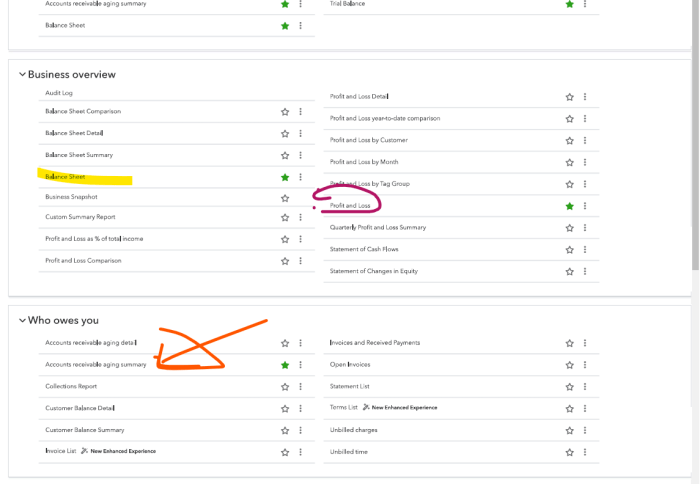
Bank, Credit Card, Loan Account Reconciliations and Statements

Accounts Payable and Accounts Receivable Aging Detail

Payroll Summary

Profit and Loss by Month

Balance Sheet

Tip: Ensure you check in with your bookkeeper before you pull reports and have them confirm their work relating to the period you want to review has been completed.

CRA Online Accounts-Don’t Delay Your Registration!

Do you have access to your Canada Revenue Agency personal online account? If not, make access a priority now!

Why Should I Register? What’s the Hurry?

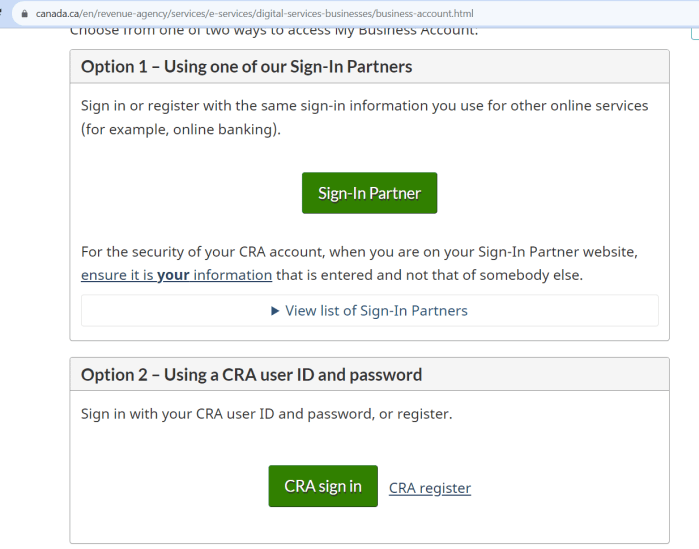
Changes at the CRA now require that individuals have access to their online account in order to access certain services, a related business account (if you are a business owner), or a non -profit society or charity account (if you are a director or signing authority).

Additionally, if a loved one dies and you are named the executor or administrator of the Estate, you will need a CRA online account in order to access their account as a legal representative.

Named “My Account”, your personal online account is a secure portal that lets you view your personal income tax and benefit information and manage your tax affairs online.

Registration is a multi-step process that includes the CRA mailing an individual a security code through Canada Post. This can take up to a month and can make your financial activities very inconvenient if you are in a hurry to access documentation. This means you should register before for the account before you need to access it.

Can my accountant set up my account for me?

Only the account holder can set up their online account. If you have a family member that requires assistance with this process, be advised that the CRA phone line wait times can be up to 2 hours and sufficient time should be set aside in the day to assist them with the account set up.

What’s Required for Registration?

Before you can register, you must have filed your income tax and benefit return for the current tax year or the previous one.  

To get access, you will need:

  • your social insurance number;
  • your date of birth;
  • your current postal code or ZIP code and;
  • an amount you entered on your income tax and benefit return, so have your return on hand (the line requested will vary and it could be from the current tax year or the previous one).

For step-by-step instructions on setting up your CRA user ID and password, go to Registration process to access the CRA login services (link below)

https://www.canada.ca/en/revenue-agency/services/e-services/cra-login-services/cra-user-password-help-faqs/registration-process-access-cra-login-services.html#hlp1a

Keeping Records for the CRA

One of the benefits of moving to cloud accounting is that you can keep copies of all your receipts right in the accounting file. Or can you? Here is what the CRA has to say about accounting records.


Q: What is an acceptable accounting record format?

A: The Canada Revenue Agency (CRA) accepts records that are produced and kept in:

  • paper format
  • paper format, and later converted to and stored in an accessible and readable electronic format
  • an accessible and readable electronic format

Records and supporting documents originally produced in paper format

You have to keep these items in paper format, unless they are saved in acceptable microfiche, microfilm or electronic image formats.

You can use electronic imaging software to keep images of paper records. For more information on microfiche, microfilm and electronic imaging formats, see What is imaging?  See below.

Records and supporting documents originally produced in electronic format

You have to keep them in an electronic readable format, even if you have paper printouts.

Q: What is imaging?

A: Generally, you must keep originals of your paper documents. However, you can produce electronic images of these documents, known as imaging. The images can be kept in electronic files, on microfiche or on microfilm.

Imaging a paper supporting document

When producing an image of a paper document, you must make sure:

  • it is an accurate reproduction with the intention of it taking the place of the paper document
  • it gives the same information as the paper document
  • the significant details of the image are not obscured because of limitations in resolution, tonality or hue.

Reproducing imaged documents

Reproductions of imaged documents are as acceptable as the originals, if you follow certain procedures.

You must produce, control and keep imaged reproductions (including microfilm and microfiche) of books of original entry and source documents according to the latest national standard of Canada. For more information, see the following publications:

You can also see the Canadian General Standards Board (CGSB) publication at CAN/CGSB 72.34, Electronic Records as Documentary Evidence.

If your business is using commercial software for smaller scale electronic scanning of its paper records and supporting documents, it should make sure the scanned records meet the rules and guidelines set out in the latest national standard of Canada.

Q: Destroying imaged paper documents

A: If you have imaged your paper books of account and supporting documents according to the CGSB standards, the images become the permanent records. You can therefore destroy the imaged paper item. If you have any doubt about destroying any paper records, get legal advice first.

If your business cannot meet the CGSB standards when imaging, it has to keep the original documents.

Q: Backing up electronic files

A: You should make backup copies of all your business information that has been recorded on rewritable media, such as computer hard disks, floppy disks, CDs, DVDs, tapes or cartridges. A backup copy allows you to access your information if you accidentally lose, delete or erase the originals.

You should store the media containing the information in an environment that is free from hazards that could affect the media. These hazards include magnetic fields, direct light, excessive moisture and temperature extremes.

When you keep backup records in a different medium, you should:

  • follow the suggested procedures of the media manufacturer
  • pay particular attention to the suggested shelf life of the medium
  • ensure the file backup can be restored in a format that is usable and accessible by the CRA

If you contract an outside party to keep your electronic records, the records must still be available to CRA officials when they ask for them.

Rental Property Investment Primer

So, you have purchased a rental property as a “good investment”, but are you putting time into managing that investment? Repairs and maintenance are just one aspect of managing a capital rental property. When it comes to taxes, the financial management of that property is just as important as daily upkeep.

Track Your Property’s Life Cycle

The life cycle of a property can be tracked just like any other capital investment. This means the original cost, changes to the actual asset, and information about the final disposition of the property are all important data that can help you determine what you do with the property over time and the best time to sell it or otherwise dispose of it. Some questions that tracking data can help you answer include:

-Should we claim capital cost allowance (depreciation) on the property?

-Should we live in the building for any period of time before we sell it?

-We might have to sell the property for a loss. Is there an advantageous time to sell it?

Investment Timeline and Outcome

The length of time you plan to retain the investment for, and how you plan to end ownership (ie: sell it, transfer it to a trust, or leave it in a will) can greatly impact day to day decision making, but also inform your related tax plan.

How to Track Your Investment

Work with your accountant to develop a custom rental property investment tracking template. It should include information about the ownership structure, purchase date and costs, yearly activities (for example if you lived in the rental for any period of time), capital improvements you did not claim as expenses on prior income tax returns, costs to sell, and the proceeds received when the property is eventually disposed of.  It is also a good idea to understand what expenses you can claim before tax time.

https://www.canada.ca/en/revenue-agency/services/tax/businesses/topics/rental-income/completing-form-t776-statement-real-estate-rentals/rental-expenses-you-deduct.html

Get Ready to Get Grants!

Are you a not-for-profit director? Are you planning to grow your organization? Strategically planning your accounting set up can help you acquire and maintain the necessary revenue streams that your organization needs to achieve its goals. 

Fund Accounting for Transparency

Fund accounting is an optional accounting policy choice that a not for profit can adopt for its financial reporting. The organization creates different funds to track contributions. The funds can be internally designated or they could be required by current or anticipated (future) funders. Typically, the different funds include unrestricted (general operating) funds, restricted funds (these funds may have separate bank accounts), capital funds (set aside for asset purchases), and endowment funds (where the capital is protected and the interest or other income produced is utilized in some manner). 

Fund accounting helps managers, donors, grantors, and lenders, easily understand how the financial activities of the organization relate to specific programs and this boosts confidence in the ability of the organization to fulfill its mandate.  

Cloud accounting software such as Quickbooks Online and Xero both offer methods for tracking funds and reporting them to users of the financial statements.

Reporting for Best Decision Making and Compliance

Funders want to see a record of good governance. Good governance is ACTIVE governance. This means that directors review the books and that those books need to be kept up to date. In fact, most organizations do not realize that keeping their financial records updated and reviewed on a regular basis (more often than yearly) is what can separate successfully financed organizations from those that are always scrambling to renew or find funding sources. 

Invest in a Financial Advisor 

Don’t wing it. Designing the financial reporting system and related policies of an organization is DIRECTLY and INSEPARABLY related to its strategic planning. Although it takes time and resources to set up and manage an accounting system, it takes more effort to convince funders to support a poorly managed operation that cannot demonstrate how it used its hard won funds. Start planning now!

Banking Lessons for Sole Proprietors 

Running a small business is a real hustle. You do it all. The work, the admin, the bookkeeping, the customer service, and let’s not forget advertising! You have a sense of what you’re making, and it seems like decent income, but you keep coming up against unanticipated expenses or cash flow hurdles. Here’s a question for you:

Do you have a separate business bank account?

3 Reasons to set up a separate bank account for your business

Stop Stealing From Yourself!

When there’s cash in the bank, you spend it and when you are short on cash you pay your business expenses with your credit card. Are you tracking all the deductible portions of the credit card fees and interest payable for those business expenses charged to that card? Probably not, because it would take a lot of time to calculate. 

By co-mingling your personal and business activities in one bank account you could be creating extra financing expenses for business, robbing it of the capital it needs to purchase assets or take advantage of trade discounts.

What Was That Payment for Again?

After a busy month (ok, let’s admit it is sometimes an entire year), there are just so many payments from your bank account that you can’t remember which ones were business expenses and which ones were personal purchases. And was that a loan from your mother, or was that the refund from last year’s taxes?

As a business owner, you are almost certainly missing out on deductibles that will lower your taxable income and at the same time, increasing the risk that you will not be able to prove to the CRA which deposits were income, and which were non-taxable gifts or loans. 

Cut the noise. A separate business account will contain fewer transactions that will be more easily identifiable, and will allow you to observe your actual cash flows which improves your decision making ability.

I Forgot to Save For Income Taxes!

On average, sole proprietors are encouraged to set aside around 25% of their net income for annual income taxes (paid annually at tax time, or paid over course of the year through installments). During your first few years in business, you may not be able to predict how much income you will earn, and this can result in tax bills that you have not saved for. 

By setting up a separate bank account, you can set up a sub account and transfer money each month so that you avoid the income tax crunch.

Many banks now offer online bank account set ups. It may be the best 10 minutes you spend on your business this year.

Building a Shop on Your Property For Business Use

It’s construction season in the Kootenays! And you are thinking about (or starting to build) a shop on your personal property for your business. Maybe you’re a construction contractor or you sell artwork.

This means it’s time to talk tax. In very basic terms, changing the way you use your real property (or a portion of that property) from personal to business, or vice versa, may have an immediate, and a long term impact on your tax situation. 

Let’s run through 2 very general, but common scenarios.

Scenario 1

Building a shop on property you claim as your principal residence, and claiming a portion of your ongoing property expenses as home office expenses. 

The CRA notes that “when there is a change in use of a property you have, you may be considered to have sold all or part of your property even though you did not actually sell it.” The following are some sample situations provided:

  • You change all or part of your principal residence to a rental or business operation
  • You change your rental or business operation to a principal residence

“Every time you change the use of a property, you are considered to have sold the property at its fair market value and have immediately reacquired the property for the same amount. You have to report the resulting capital gain or loss (in certain situations) in the year the change of use occurs.

If the property was your principal residence for any year you owned it before you changed its use, you do not have to pay tax on any gain that relates to those years. You only have to report the gain that relates to the years your home was not your principal residence.”

As always, there are exceptions to the rule, as well as elections that taxpayers can submit to address this issue.

However, the CRA may deem that you did not have a “change of use” to your property if:

  • your rental or business use of the property is relatively small in relation to its use as your principal residence
  • you do not make any structural changes to the property to make it more suitable for rental or business purposes
  • you do not deduct any CCA (depreciation) on the part you are using for rental or business purposes

You can see how there is space for some interpretation here and that carefully considering the portion of property expenses attributed to your business can be an important tax decision.

Scenario 2

Building a shop on property you claim as your principal residence and then claiming all the related expenses for that project as business expenses.  

As outlined above, if you make a structural change to your property, the CRA can deem  a “change in use” for your property. This means you should very carefully consider if you want to claim a new building as a business asset/expense.

Activities that mix personal and business use should be considered two components of one overall tax plan.  

Read Up!

https://www.canada.ca/en/revenue-agency/services/tax/individuals/topics/about-your-tax-return/tax-return/completing-a-tax-return/personal-income/line-12700-capital-gains/principal-residence-other-real-estate/changes-use/changing-part-your-principal-residence-a-rental-business-property.html

Protect Your Business with the 5 Cs of Credit 

Do you allow customers to pay you later? Let’s say in 10, 15, or 30 days? If you do, your business is extending credit that could make or break your cash flow. Savvy business owners (regardless of size), use the 5 Cs of Credit to protect their business from loss. 

Character

If you live in a small community, this is the filter you will likely use the most. What is your customer’s reputation in the community? Do you hear good things about them from other business owners, from their customers? It is not inappropriate to ask for references from their other suppliers to prove that they honor the terms of the credit extended. 

Capacity

Does your customer have the ability to repay you? If you set a high limit on the credit you are willing to extend and they max out that credit, will they default or take months to pay you back for an invoice due in 30 days? Consider setting a low time or dollar limit for new customers until you develop some history with them. Dip your toe in the water before you take a plunge.

Capital

There are a few ways to think about capital in the small business context. Traditionally, a lender such as a bank will want a customer to show they can bring some of their own money to an agreement to show that they are serious and can practically manage to pay back credit. Your small business could ask a customer for a deposit, or require a payment plan. 

Collateral

If you are entering into a financially significant agreement, ask your accountant or lawyer about how to protect yourself from loss by including collateral (an alternative source of repayment) in a transaction agreement. This may sound like a tool that only banks or large corporations utilize, but small businesses use it successfully as well.

Conditions

What industry does your client operate in? Is it financially high or low risk? Are they new to their industry or established? Considering your client’s business environment can help you determine the risk in extending them additional time to pay you.

Contact your chartered professional accountant if you need suggestions on how to integrate credit checks into your operations. It’s always a good time to protect your assets and build the best possible relationships with your customers. 

Supervise Your Bookkeeper-2 Ways to Start Today

Your bookkeeper works for you. You are their client, but you are also the boss! This can be a very challenging truth when you are not sure how to supervise or approve the important bookkeeping work that you are paying for. Even if your bookkeeper is a contractor, you must still determine if their work meets your requirements.

So, how do you supervise your bookkeeper? If you don’t know a lot about bookkeeping, accounting, or finance, here are a few places to start.

Monthly Reporting 

Ensure your accounting software has a chart of accounts that are coded to create working reports. Basic reports that you should be reviewing every month include:

Profit and Loss

Even if you only have basic financial literacy, you will be surprised how much you know about your business. Reviewing your profit and loss statement (income and expenses) each month will alert you to duplicate expenses (ie: why is the insurance expense so high this month?) or mis-dated entries (ie: the leasing expense seems low, but we pay that monthly). 

Balance Sheet

Balance sheets can be intimidating to review. Try starting with cash. Does the cash on the balance sheet agree with what you think you have in the bank? If not, ask your bookkeeper to explain any discrepancies. What about your prepaid expenses? For example, did you pay property tax in a large lump sum in July and has that been drawn down to roughly half by December?

Accounts Payable

Which suppliers do you owe and do you see them represented at month end? If a bill that you received is not recorded at the amount you recall, or absent from the list of payables, you may not have provided it to the bookkeeper, or they may have overlooked it, or recorded it incorrectly. Reviewing this report ensures you don’t miss important payments, or pay inappropriate amounts.

Accounts Receivable

Which customers owe you? Do you see them represented on the account receivable report? If not, why not? Do you see a customer with a large amount owing, but remember they paid you? Ask your bookkeeper if they are getting the required information from you and in a timely manner. 

Record Upcoming Due Dates

Ultimately, it is your responsibility as a business owner to know when corporate income tax, sales tax, worksafe premiums, payroll deductions, and other filings are due and payable. Mark these dates on your calendar and ensure your bookkeeper is providing you with enough time to review prepared filings, ask questions, and arrange payment before the deadlines.

Limited supervision is better than no supervision. It also provides a chance for you to gain control over your business and learn about how to use financial terminology. Start small and add supervisory tasks as time allows. Practice makes perfect.